


One of the main reasons we chose to visit Sri Lanka was for the wildlife, and it absolutely delivered. For such a small island, it’s home to an incredible mix of animals. We saw elephants in the wild and spotted leopards (with the help of an amazing guide). It was one of the most diverse wildlife experiences we’ve had on our travels.
On our own trip to Sri Lanka, we spent four days on safari in Yala and another in Minneriya, and we were rewarded with unforgettable wildlife encounters. From turning a corner to find a leopard lounging on the road to watching a bird of prey carry a snake in its claws, those kinds of sightings are hard to forget, and they still come up in conversation whenever we talk about the trip.
If you are a traveller in your 50s or beyond, wildlife safaris in Sri Lanka offer the perfect mix of comfort and adventure. While the rides can be a bit bumpy, especially since they are on dirt tracks, you’re seated most of the time, allowing you to soak in the landscape while your guide helps spot the next incredible animal.
In this post, I’ll guide you through the most iconic and unique animals you can encounter in Sri Lanka, where to find them, and what makes each encounter special. Whether you’re planning your first safari or looking to tick off a few more animals from your travel wish list, this guide is for you.
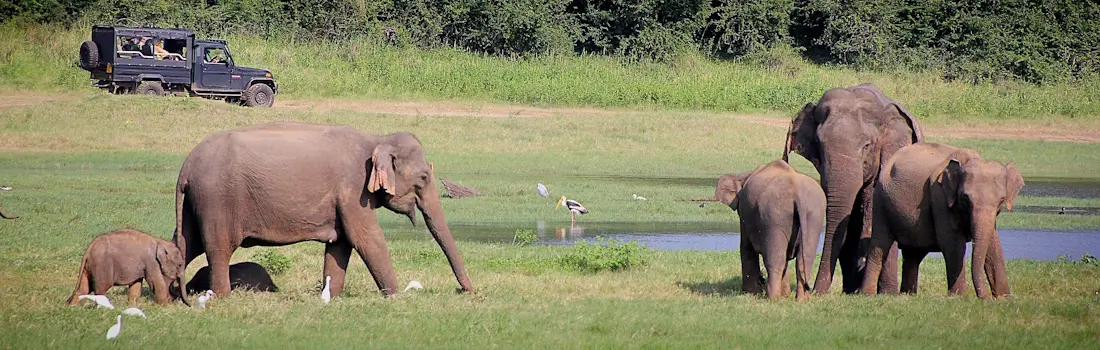
The Sri Lankan elephant is not only a national icon but also one of the most majestic animals you can encounter in the wild. A subspecies of the Asian elephant, they are slightly smaller than their African cousins, but no less impressive. Sadly, they are also listed as Endangered, with habitat loss and human-wildlife conflict putting continued pressure on their populations.
One of the most awe-inspiring wildlife experiences you can have in Sri Lanka is witnessing the elephant gathering in Minneriya. Each year, during the dry season (typically from July to September), hundreds of elephants migrate to the Minneriya Tank to drink, bathe, and socialise. It’s the largest known gathering of Asian elephants in the world.
Another great spot is Udawalawe National Park, where elephants roam freely in open grasslands. Unlike Yala, it’s less crowded and nearly guarantees sightings. And of course, Yala National Park also offers elephant encounters, often in more forested surroundings.
On our safaris, we saw elephants almost every day, crossing tracks, bathing in waterholes, or grazing quietly just metres from the vehicle. There’s something grounding about being in their presence. They’re enormous, yet incredibly gentle and peaceful.
🎟️Find tours for Minneriya National Park
🎟️Find tours for Udawalawe National Park
🎟️We recommend staying at Kulu Safari at Yala National Park. They do safaris for their guests.
🦣 Tip: Choose a reputable safari operator with comfortable vehicles (like V8 Land Cruisers used by Kulu Safaris). Minneriya safaris tend to be shorter and smoother, while Yala can be bumpier and longer.
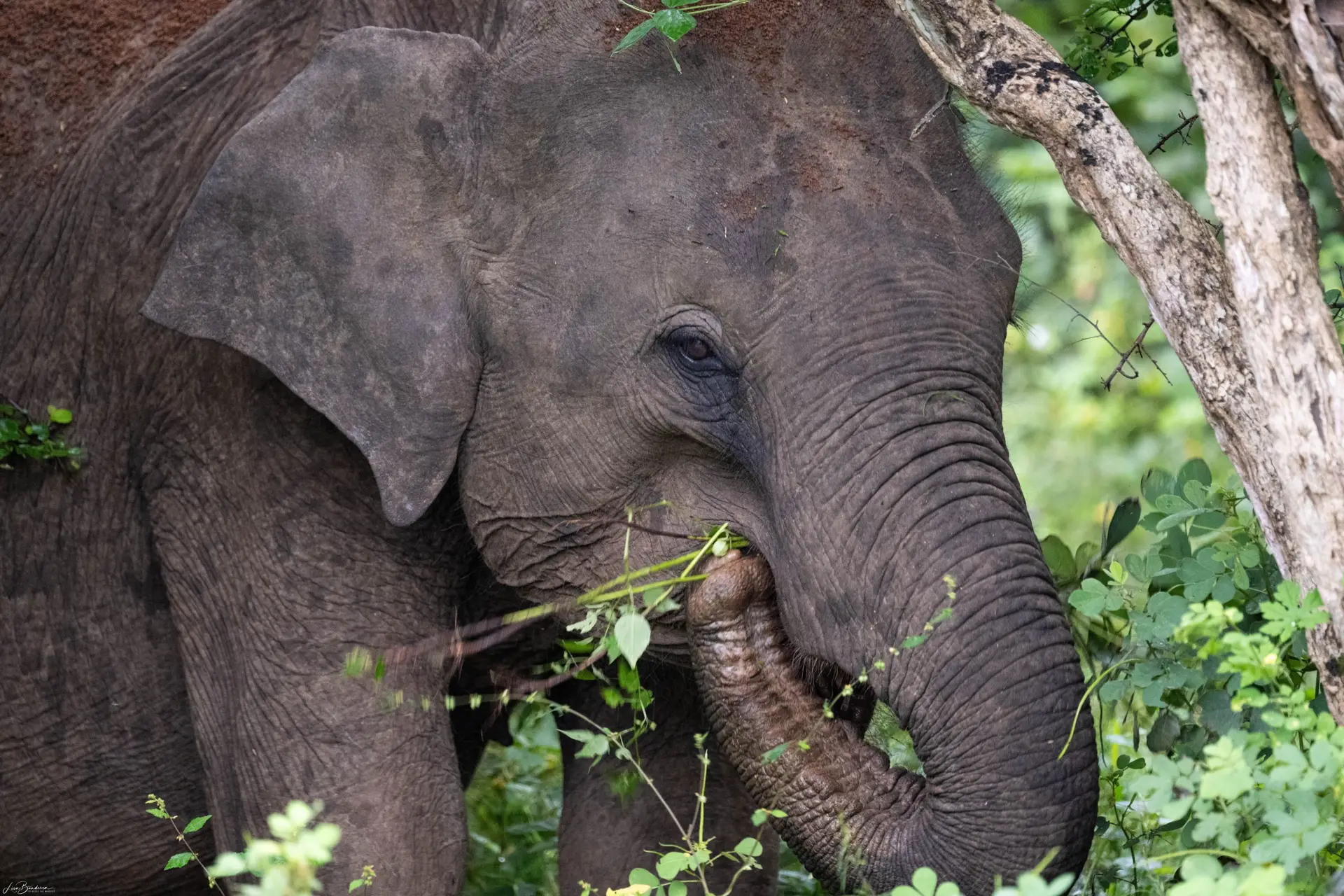
The Sri Lankan leopard is one of the most sought-after animals to see on safari, and with good reason. As the apex predator on the island, this subspecies of leopard is not only rare but Endangered, making sightings all the more special. Luckily, Sri Lanka is one of the best places in the world to spot them in the wild.
Yala National Park, particularly Block 1, is renowned for having the highest leopard density of any park in the world. This means that with a bit of patience and a sharp-eyed guide, your chances of seeing one are surprisingly high. We saw two in Block 1 and one in Block 5. Wilpattu National Park, although less visited, offers a quieter and more off-the-beaten-path alternative for leopard sightings.
During our time in Yala with Kulu Safaris, we were lucky enough to do six game drives. One morning, we turned a corner on a remote dirt track and came face-to-face with a young male leopard, calmly resting right in the middle of the path. No other vehicles were around – it was just us and him. That stillness, that moment, was absolutely magical.
📌 Where to See Them:
🎟️ We recommend staying at Kulu Safari at Yala National Park. They do safaris for their guests.
🔗 For more information: Yala National Park Official Site
🐾 Tip: Early morning and late afternoon safaris give the best chance of leopard sightings. Be sure to bring a good camera and lens – here’s what I recommend.
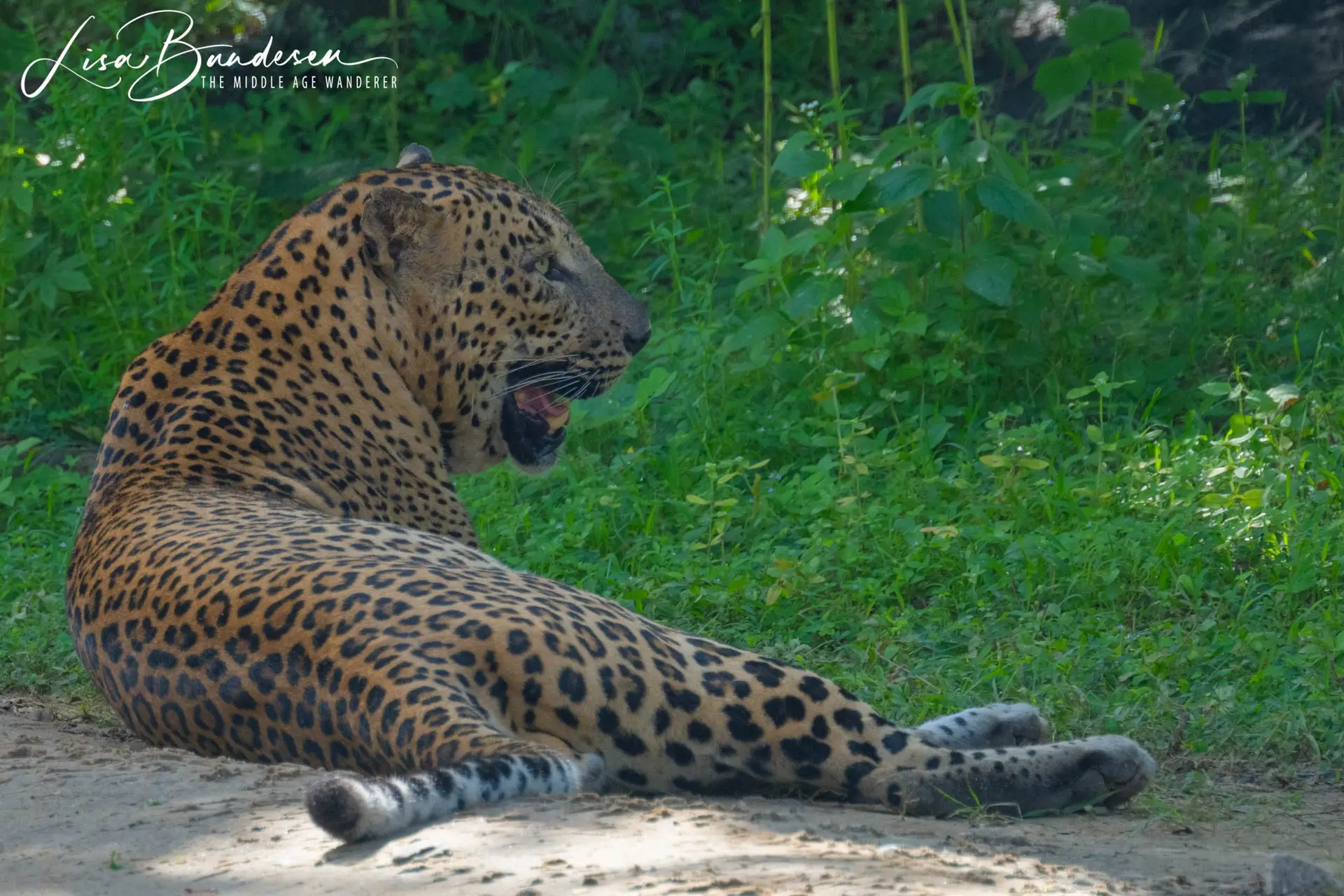
If there’s one animal in Sri Lanka that truly plays hard to get, it’s the Sri Lankan sloth bear. With its shaggy coat, long claws, and unique gait, this Endangered species looks almost prehistoric. And while they may not be as famous as leopards or elephants, sloth bears are an exciting and rare sighting on safari.
These nocturnal creatures are most active at dawn and dusk, and they tend to stay in the shadows of the forest. The best chance of spotting one is during the palu fruiting season (around May to July), when the bears venture out in search of ripe fruit.
Yala National Park and Wilpattu National Park are both renowned habitats, although even in these places, spotting a sloth bear is considered a rare occurrence. They’re more commonly spotted when food is abundant and the forest is quieter, so the fewer 4WDs around, the better.
Despite doing six safaris in Yala, we never spotted one ourselves. Our guide was constantly scanning the trees for signs – we saw claw marks, fresh tracks, and even broken branches – but the bears stayed out of sight. That’s the thing with safaris: it’s always a bit of a waiting game, and nature never works to a schedule.
📌 Where to See Them:
🎟️ We recommend staying at Kulu Safari at Yala National Park. They do safaris for their guests.
🐻 Tip: Book early morning safaris during fruiting season and be patient as these bears are elusive. Binoculars can help spot movement in dense brush.
Monkeys are some of the most entertaining animals to watch in Sri Lanka. They’re social, agile, noisy, and often downright cheeky, whether they’re swinging through the trees or foraging by the roadside. And depending on where you go, you’re likely to spot a few different species during your trip.
Sri Lanka is home to three main types of monkeys:
📌 Where to See Them:
🎟️We recommend staying at Kulu Safari at Yala National Park. They do safaris for their guests.
🐒 Tip: We saw a few tourists try to hand food to monkeys – it never ends well. They might look cute, but they can become aggressive quickly, and it disrupts their natural behaviour. I stuck with my zoom lens, which let me get some great shots without risking a monkey meltdown.

Some of the most impressive animals we saw in Sri Lanka were not the loudest or the biggest – they were the crocodiles. Mugger crocodiles have been around forever, and spotting one sunbaking on the riverbank or lurking just below the surface with only their eyes showing always gave me a bit of a thrill. They look calm, but you wouldn’t want to get too close.
We spotted several crocodiles during our safaris in Yala, usually near water sources. Some were small, barely disturbing the surface of the water, while others were massive, lying still in the mud. On one drive, we watched a monitor lizard, nearly a metre long, casually crossing the track ahead of us, completely unbothered by our presence.
Other reptiles you may see include:
📌 Where to See Them:
🎟️We recommend staying at Kulu Safari at Yala National Park. They do safaris for their guests.
🎟️Find tours for Bundala National Park
🎟️Find tours for Udawalawe National Park
🐊 Tip: Keep your camera ready when near the water, as crocodiles are masters of camouflage. Most sightings are brief unless they’re sunning themselves.

We are not hardcore birdwatchers, but even we were amazed by the number of different birds we saw in Sri Lanka – more than 400 species have been recorded here. Whether you are into birdwatching or just enjoy spotting something colourful in the trees, the national parks and wetlands are full of activity. A lot of birds migrate through the island too, especially between November and April, which is a great time to plan a visit.
On our safaris in Yala, we saw everything from majestic birds of prey to vibrant peacocks strutting confidently along the tracks. One particularly memorable sight was a bird of prey perched high on a branch, with a snake dangling from its claw. It was a raw and powerful moment that reminded us of the delicate balance of nature.
Other birds you might spot include:
📌 Best Places for Birdwatching:
🎟️We recommend staying at Kulu Safari at Yala National Park. They do safaris for their guests.
🎟️Find tours for Bundala National Park
🐦 Tip: Bring a good pair of binoculars and, if you’re into photography, a telephoto lens. The early morning is the best time for birdwatching, so get up early and enjoy the peaceful start to the day.


While Sri Lanka’s land animals often steal the spotlight, the waters around the island are just as wild. If you’re keen to trade jeep tracks for sea spray, head to the southern or western coasts – especially during the whale watching season from November to April.
Mirissa, on the southern coast, is the best place to see blue whales, the largest animals on Earth. You may also spot sperm whales, Bryde’s whales, and playful spinner dolphins. Tours typically depart early in the morning, and while sightings are not guaranteed, success rates during peak season are impressively high.
Kalpitiya, on the northwest coast, is another great spot, especially known for large pods of dolphins, sometimes numbering in the hundreds.
Sri Lanka is also a nesting ground for several species of sea turtles, including green turtles and hawksbill turtles. You can sometimes witness turtle hatchlings being released into the ocean at Rekawa Beach, though it’s essential to choose operators that follow ethical practices.
📌 Where to See Marine Life:
🎟️Find tours for Mirissa
🐋 A quick heads-up for travellers: the sea can get pretty rough, especially on whale-watching trips. If you are prone to motion sickness (like I am), take sea sickness tablets before you get on the boat. Also, make sure you book with a company that takes animal welfare seriously.
While they may not generate the same excitement as a leopard or elephant, Sri Lanka’s more common mammals are vital to the ecosystem – and you’re likely to see them often on safari.
Spotted deer (also known as chital) are graceful and alert, usually seen in herds grazing in open spaces or keeping a cautious eye out near waterholes. Their presence often signals nearby predators – leopards follow them closely.
Sambar deer, which are larger and darker, are typically seen alone or in small groups. They tend to stick to denser forest areas and are less skittish than their spotted cousins.
You’ll also encounter wild water buffalo, characterised by their wide horns and distinctive wallowing habits. These heavy-set animals are not to be underestimated. While generally placid, they can be unpredictable when startled.
Other mammals you might spot include:
📌 Where to See Them:
🦌 Tip: We found that early morning and late afternoon were the best times to spot animals like deer and buffalo – it is cooler, so they are more active. Plus, if you enjoy taking photos, the lighting is much better than in the middle of the day.

Sri Lanka’s biodiversity is extraordinary – but it’s also under threat. Many of the animals travellers hope to see on safari are either Endangered or Vulnerable, according to the IUCN Red List. Habitat loss, poaching, and human-wildlife conflict are the primary threats facing these species.
Some of the most at-risk animals include:
Fortunately, Sri Lanka is also home to a growing number of conservation efforts, both government-backed and grassroots. National parks and wildlife sanctuaries play a major role, as do local guides and safari operators who emphasise ethical practices.
If you’re planning wildlife experiences, always ask about the operator’s stance on:
🌿 Tip: Choosing responsible tour operators doesn’t just protect wildlife, it often leads to more rewarding and peaceful experiences, fewer crowds and more profound moments in nature.

One of the best things about wildlife safaris in Sri Lanka is that they’re ideal for travellers in their 50s, 60s, and beyond. You don’t need to be ultra-fit or adventurous – just curious, patient, and ready to be amazed.
That said, here are a few tips to help make your safari experience smoother and more enjoyable:
1 – Choose the Right Vehicle
Choose a reputable operator with well-maintained 4-wheel drive (4WD) vehicles. We toured with Kulu Safaris, whose V8 Land Cruisers made a significant difference – they can comfortably handle rougher terrain and access remote areas that other vehicles can’t reach.
2 – Prepare for Bumpy Rides
Safari tracks can be rough, especially in Yala National Park. If you have back or joint issues, consider sitting in the front or middle rows to minimise bounce. Bring a small cushion if needed.
3 – Pack Smart
Essentials include:
4 – Book Sunrise and Sunset Drives
Animals are most active at dawn and dusk. These times also mean cooler temperatures which are perfect for comfort and great lighting for photography.
5 – Don’t Rush the Experience
You don’t need to see everything on one drive. The beauty of wildlife is in the unexpected – the quiet moments, the tracks, the sounds. Take it all in, and enjoy the pace.
📌 More Travel Tips: Safari in Sri Lanka – The Ultimate Guide
Sri Lanka offers one of the most accessible and rewarding wildlife experiences in the world. From elephants gathering by the hundreds in Minneriya to the elusive leopards of Yala, from vibrant birdlife to the gentle giants of the sea – this island delivers unforgettable encounters in every direction.
For mature travellers, it’s an ideal destination. You don’t have to trek for hours or rough it in the wild. Instead, you can experience the thrill of nature while staying comfortable and safe, with expert guides and ethical safari operators who respect the animals and the land.
Every safari is different. On some days, you’ll spot dozens of species. Others, it’s just you, the silence, and the hope of a leopard in the distance. But that’s what makes it magical.
So if you’ve ever dreamed of seeing wild elephants up close, of hearing the call of a hornbill in the forest, or of locking eyes with a leopard – Sri Lanka is calling.
🐘 Ready to plan your adventure?
Explore my related guides or check out the recommended tours linked throughout the post.
Q: What is the best time to see wildlife in Sri Lanka?
A: It really depends on what you are hoping to see. If elephants are high on your list, the gathering in Minneriya between July and September is something special – we timed our trip around it and were not disappointed. For whales, head to Mirissa between November and April. In general, the dry season (around February to October for most parks) makes it easier to spot land animals since there is less vegetation and they come out more often to waterholes.
Q: Which national park is best for wildlife in Sri Lanka?
A: Yala National Park is the most popular and offers the highest chance of seeing leopards. Udawalawe is excellent for elephant sightings, while Wilpattu offers a quieter and more rugged safari experience. Each park has its own strengths depending on your wildlife interests.
Q: Is it safe to go on safari in Sri Lanka for older travellers?
A: Yes! Safaris are primarily conducted from seated 4WD vehicles, making them accessible and safe for travellers in their 50s and beyond. Be prepared for bumpy dirt roads and bring essentials such as water, sun protection, and any necessary personal medication.
Q: Can you see leopards in Sri Lanka?
A: Absolutely. Sri Lanka, particularly Yala National Park, is known for having one of the highest leopard densities in the world. With patience and a good guide, chances of spotting one are excellent – though they are wild and elusive animals.
Q: Are the animals in Sri Lanka endangered?
A: Yes, several key species are listed as Endangered, including the Sri Lankan elephant, leopard, sloth bear, and purple-faced leaf monkey. Ethical tourism and conservation efforts are essential to their survival, so always choose responsible safari operators.
Q: What should I pack for a wildlife safari in Sri Lanka?
A: Keep it light and practical. I packed a wide-brimmed hat, sunglasses, sunscreen, and insect repellent – and used them all. Lightweight, breathable clothing is a must, especially for midday safaris. Binoculars are great for spotting animals in the distance, and if you are into photography, do not forget your camera, spare batteries, and extra memory cards. And always bring water – it gets hot fast out there.
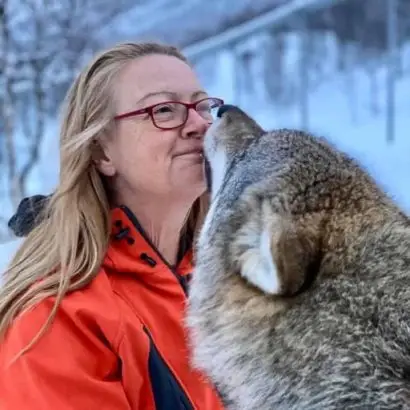
Hi, I’m Lisa Bundesen - the voice behind The Middle Age Wanderer. I’m a retired chartered accountant turned passionate traveller and photographer. Alongside my husband Darren (and with our two fur babies waiting at home in Australia), we explore the world one adventure at a time.
I’ve travelled to over 35 countries, and I created this blog to inspire fellow travellers in their 50s, 60s, and beyond to embrace adventure. Whether it’s hiking ancient trails, diving into new cultures, or sipping wine in scenic places, I believe life after 50 is the perfect time to explore more.
Here, you’ll find honest travel advice, destination guides, and real stories to help you travel smarter and with more confidence - because age is not a barrier, it’s an invitation.


Explore the World with Us!
Join our newsletter for travel advice, tips and inspiration.
Hi, I’m Lisa, a 50+ retired chartered accountant. My husband, Darren, and I explore the world every opportunity we get. Staying fit is key to our adventures, from hiking the Inca Trail to scuba diving. We call Australia home but travel overseas often, always eager to discover new cultures, bustling cities, cuisines, nature and wildlife.
We would love you to join us on our journeys and hope that our adventures give you encouragement to explore this amazing world.
Some of the links below are affiliate links, meaning, at no additional cost to you, I will earn a commission if you click through and make a purchase. This helps me to keep bringing you travel updates and news. See my Disclosure Policy for more information.
I only recommend companies and products that I personally use.
Explore the World with Us!
Join my newsletter for travel advice, tips and inspiration.
As Seen On

Recent Posts



Categories
Action Camera We Use

Where We Book Accommodation
How We Research Flights

How We Protect Our Laptop

Our Hiking Guide

Related Posts
Some of the links below are affiliate links, meaning, at no additional cost to you, I will earn a commission if you click through and
Is it safe to travel in 2026? Learn the modern travel risks to watch and travel safety tips that help you stay confident, calm, and prepared. ✅✈️
Are animal cafes ethical? Use this quick decision guide to spot red flags, understand welfare concerns, and choose kinder alternatives that give animals a life worth living.
Worried about scams when travelling? Learn how to spot and avoid the most common travel scams before, during, and after your trip, without the stress.

Travelling somewhere cold? Skin care in cold destinations for travellers over 50 is about comfort, not perfection. Learn what really works.