


Seeing wild elephants in Sri Lanka is a bucket-list experience – but not all elephant encounters are created equal. From overcrowded jeeps chasing herds to roadside elephants fed by passing cars, it’s easy to support unethical tourism practices unintentionally.
I’ve been on multiple safaris in Sri Lanka, including a three-day trip to Yala and a visit to Minneriya. I’ve also served for nearly a decade on the board of one of the largest animal welfare organisations in the Southern Hemisphere – an organisation that helps more than 50,000 animals annually, half of them native wildlife. So, I take responsible wildlife tourism seriously.
In this guide, I’ll share the best national parks for seeing elephants in Sri Lanka, how to book an ethical elephant safari, and what to avoid. Whether you’re a first-time visitor or planning your next wildlife adventure, you’ll learn how to witness these majestic animals respectfully – and help protect them for generations to come.
Sri Lankan elephants are a national treasure – and an endangered species. According to the World Wildlife Fund, fewer than 6,000 wild elephants remain on the island. Habitat loss, human-elephant conflict, and irresponsible tourism are all taking a toll on their survival.
What many tourists do not realise is that unethical wildlife practices are often disguised as legitimate tours. Safari drivers may crowd elephants for better photos. Orphanages may claim to rescue animals, but allow harmful direct interaction. Even roadside feeding, a common sight near national parks, conditions elephants to approach vehicles, putting both animals and people in danger.
As someone who’s worked extensively in animal welfare, I’ve seen how even well-meaning tourists can unintentionally support harmful behaviour. That’s why choosing ethical operators is so important – not only for the animals’ welfare, but for your own safety and experience.
By supporting conservation-minded safaris, you help protect Sri Lanka’s elephants and ensure future travellers can enjoy these awe-inspiring moments too.
Sri Lanka’s national parks offer some of the most spectacular opportunities to see elephants in the wild. Each park has its own unique highlights, seasons, and safari styles, making it essential to choose one based on the type of experience you want.
Best for: Witnessing The Gathering – the world’s largest seasonal congregation of Asian elephants.
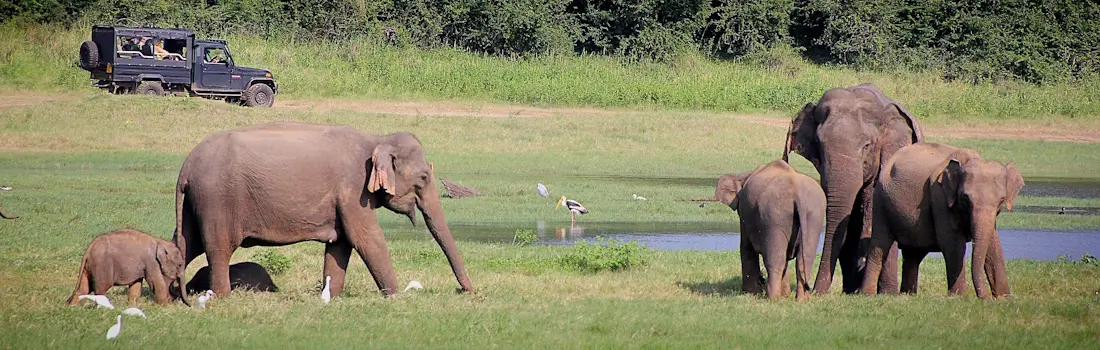
Minneriya is famous for The Gathering, which occurs during the dry season from July to October. As the water dries up elsewhere, elephants from surrounding forests migrate to the Minneriya Tank (a man-made reservoir) to drink, bathe, and socialise. It’s not unusual to see herds of 200 to 300 elephants at once, including calves playfully splashing in the shallows.
But with popularity comes risk. Some tours crowd the animals for close-up shots. To witness this natural wonder respectfully, choose safari providers that maintain distance and avoid the busiest hours.

Best for: Consistent elephant sightings year-round and incredible photography.
Unlike Minneriya and Kaudulla, Udawalawe offers reliable elephant encounters any time of year. This is thanks to its permanent water sources and large resident population. The park is open and grassy, giving you unobstructed views of elephants roaming freely across the savannah.
With fewer tourists than Yala and fewer seasonal swings than the north-central parks, Udawalawe is ideal for first-time safari-goers and photographers. The wide plains and relatively quiet atmosphere make it one of the most peaceful safari experiences in Sri Lanka.
Best for: A mix of elephants, leopards, and coastal landscapes – especially with an expert guide.
Yala is Sri Lanka’s most famous national park, particularly renowned for its leopard population, but elephants are also frequently spotted here, especially in the southern blocks. I spent three days on safari with Kulu Safaris and was impressed by their ethical approach. Our guide avoided the crowds, tracked wildlife using natural signs (such as monkey and bird calls), and provided us with peaceful and intimate wildlife encounters.
Yala’s size and biodiversity make it an adventure for those wanting more than just elephants. You’ll see crocodiles, wild boar, sloth bears, and dozens of bird species. But it’s also the park most at risk from unethical tourism, with too many vehicles converging at sightings, especially of leopards.

Not all safaris are created equal. While many promise “close-up” experiences with wildlife, truly ethical elephant tourism prioritises the animals’ welfare above tourist convenience.
One of the best experiences I had was with Kulu Safaris in Yala National Park. Our guide used natural cues to find elephants, without another vehicle in sight. It was a calm, respectful, and far more memorable experience than any chaotic chase.
By choosing ethical providers, you not only support conservation efforts but also enjoy a more rewarding, authentic encounter with Sri Lanka’s incredible wildlife.

Choosing the right safari can make the difference between a life-changing wildlife experience and unintentionally supporting unethical tourism. Here’s what to consider when planning your elephant safari in Sri Lanka:
Read our posts:
Also bring:
If a safari is suspiciously cheap or guarantees close-up encounters, it’s likely cutting corners at the expense of animal welfare. High-quality ethical safaris may cost more, and for good reason.
Use vetted sites like Get Your Guide or Viator for tours in:
These platforms often vet providers and allow reviews you can cross-reference before committing.
Even with the best intentions, it’s easy to inadvertently participate in activities that harm elephants and undermine conservation efforts. Here’s what to watch out for when travelling in Sri Lanka:
No matter how charming the setting may seem, elephant riding is never ethical. The training methods used to make elephants submissive for rides involve physical punishment and psychological distress, often starting when they’re young calves.
If you see elephants being ridden, painted, or forced to perform tricks, it’s a red flag. These animals have typically endured years of abuse to reach that level of submission.
In areas around national parks, it’s sadly common to see elephants approaching tuk-tuks and motorbikes on the road. Locals and tourists sometimes throw food to distract them or lure them away.
This might look like a sweet interaction, but it’s incredibly dangerous. Elephants become habituated to vehicles and roadways, which increases the risk of injury, conflict, and even death for both animals and humans.
Just because a facility calls itself a sanctuary doesn’t mean it’s ethical. Be wary of any location that:
Always research and verify claims of ethical treatment. Look for third-party certifications or conservation partnerships, and read independent reviews.
Read up on ethical wildlife tourism (start with this post) and choose experiences that prioritise animal welfare. The more informed you are, the better your travel decisions will be – for you and the elephants.
Seeing elephants in the wild is an unforgettable experience – but it’s also a responsibility. These majestic animals are not tourist attractions. They’re sentient beings, part of a fragile ecosystem that depends on our respect and protection.
By choosing ethical safaris, avoiding exploitative experiences, and supporting responsible operators, you’re doing more than checking something off your bucket list. You’re contributing to the survival of Sri Lanka’s elephants and setting an example for more conscious tourism.
Whether you’re watching a herd gather peacefully in Minneriya or spotting a lone bull elephant at sunrise in Yala, the moments that leave the biggest impact are often the quietest – the ones where nature leads, and we simply observe.
Travel responsibly, choose wisely, and always prioritise the welfare of wildlife.
What is the best place to see elephants in Sri Lanka?
It depends on when you’re visiting. For the iconic “Gathering,” Minneriya National Park is best between July and October. For year-round sightings, Udawalawe is the most consistent. Kaudulla is a great alternative during the migration season, and Yala offers sightings along with other big game.
Is it safe to go on an elephant safari in Sri Lanka?
Yes – as long as you book with a reputable operator who follows park regulations and prioritises safety. Ethical safaris limit the number of vehicles, maintain distance from wildlife, and are guided by professionals trained in animal behaviour.
Can you ride elephants in Sri Lanka?
You can – but you should not. Elephant riding is considered unethical due to the abuse and harsh training methods involved. Choose safari experiences that allow you to observe elephants in their natural habitat, rather than exploiting them for entertainment.
What should I bring on an elephant safari in Sri Lanka?
Pack light, breathable clothing in neutral colours, sunscreen, a wide-brimmed hat, water, insect repellent, and a good camera. Don’t forget to read The Best Camera for a Safari in Sri Lanka and The Best Memory Card for Travel to be fully prepared.
Are elephant safaris in Sri Lanka ethical?
Some are, many are not. Ethical safaris do not chase or feed elephants, stay on designated tracks, and limit disturbance. Research your provider, read reviews, and refer to guides like this one before booking. For more, read my full guide to ethical animal tourism.
Hi, I’m Lisa Bundesen - the voice behind The Middle Age Wanderer. I’m a retired chartered accountant turned passionate traveller and photographer. Alongside my husband Darren (and with our two fur babies waiting at home in Australia), we explore the world one adventure at a time.
I’ve travelled to over 35 countries, and I created this blog to inspire fellow travellers in their 50s, 60s, and beyond to embrace adventure. Whether it’s hiking ancient trails, diving into new cultures, or sipping wine in scenic places, I believe life after 50 is the perfect time to explore more.
Here, you’ll find honest travel advice, destination guides, and real stories to help you travel smarter and with more confidence - because age is not a barrier, it’s an invitation.


Explore the World with Us!
Join our newsletter for travel advice, tips and inspiration.
Hi, I’m Lisa, a 50+ retired chartered accountant. My husband, Darren, and I explore the world every opportunity we get. Staying fit is key to our adventures, from hiking the Inca Trail to scuba diving. We call Australia home but travel overseas often, always eager to discover new cultures, bustling cities, cuisines, nature and wildlife.
We would love you to join us on our journeys and hope that our adventures give you encouragement to explore this amazing world.
Some of the links below are affiliate links, meaning, at no additional cost to you, I will earn a commission if you click through and make a purchase. This helps me to keep bringing you travel updates and news. See my Disclosure Policy for more information.
I only recommend companies and products that I personally use.
Explore the World with Us!
Join my newsletter for travel advice, tips and inspiration.
As Seen On

Recent Posts



Categories
Action Camera We Use

Where We Book Accommodation
How We Research Flights

How We Protect Our Laptop

Our Hiking Guide

Related Posts
Tipping in Sri Lanka in 2026: How much to tip drivers, hotel staff, safari guides & more. Updated advice for tourists with practical examples.

Is Sri Lanka safe for older travellers? This guide covers health care, scams, transport, and safety tips based on real experiences and expert advice.

Plan the perfect 2 day Colombo itinerary: explore temples, museums, markets, and oceanfront dining in Sri Lanka’s lively capital city.

Discover 13 unforgettable things to do in Colombo, Sri Lanka for first-time visitors: from temples to food, history, and hidden gems in Sri Lanka’s capital.

Experience the incredible wildlife in Sri Lanka, where elephants, leopards, and whales roam free. This guide highlights the best national parks, when to visit, and how to enjoy ethical safaris that let you connect with nature while respecting the animals that make Sri Lanka so unique.