


If you’re craving an adventure away from the usual tourist spots, let me take you on a journey to the Westfjords Iceland. This remote corner of the country is a treasure trove of stunning landscapes, charming villages, and unique experiences.
It’s not the easiest place to get to, but that’s part of what makes it so special. In this guide, I’ll walk you through where the Westfjords are, how to get there, what the roads are like, the top places to visit, and sample itineraries to help you plan your trip.
The Westfjords are a large peninsula in Iceland’s northwest corner. They stretch out like a claw into the North Atlantic Ocean. The area is full of fjords, cliffs, and winding roads along the sea. It’s one of the most remote regions in Iceland and has a much smaller population than the rest of the country. That means fewer tourists and more peaceful moments with nature.
Getting to the Westfjords takes a bit more effort, but it’s worth it. You have a few options depending on where you’re starting from.
The most common way to reach the Westfjords is by car.
Suggested Route:
Tip: We split up the drive from Reykjavik over a few days as we visited the Snæfellsnes Peninsula on the way.

Read our article “9 Must Visit Sites on the Snaefellsnes Peninsula“. It goes through nine amazing places to visit on the Snaefellsnes Peninsula.
Another fun way to get to the Westfjords is by ferry.
Tip: You can bring your car on the ferry, which saves you some driving.
The roads in the Westfjords are different from the rest of Iceland. They can be narrow, steep, and often gravel. Here are some things to know:
But don’t let this scare you. With a 4WD vehicle and some patience, the journey is an adventure by itself.

Read our article “11 Tips for Driving in Iceland“. It goes through the things you will need to know before heading out on your road trip adventure around Iceland.

There’s a lot to see in the Westfjords of Iceland, but here are the places you really shouldn’t miss. Some are natural wonders, others are peaceful spots full of history, and most of them are way off the usual tourist track.
If you only visit one waterfall in the Westfjords, make it
If you only visit one waterfall in the Westfjords, make it Dynjandi. It’s the kind of place that makes you stop in your tracks. The main waterfall is huge – about 100 metres tall – and fans out wide as it flows down the mountain, almost like a wedding veil caught in the wind.
You don’t have to hike far to see it. From the parking area, there’s a short trail that leads you right up to the base. Along the way, you’ll pass a handful of smaller waterfalls, each with its own charm. The path is easy to walk (but can get slippery) and gives you lots of chances to stop for photos.
When you finally reach the top, standing close to the falls is a powerful experience. The sound is loud and calming at the same time. You feel the mist on your face and the cool breeze from the falling water. It’s one of those places that feels peaceful, even when other people are around.
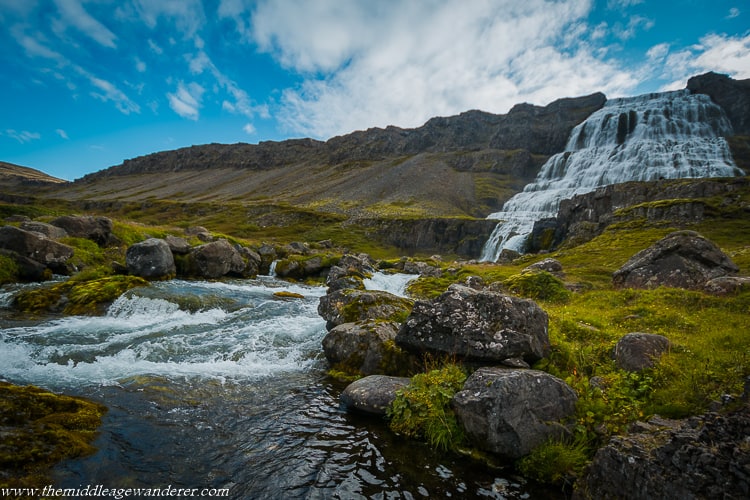
Read our article “Visiting Westfjords Stunning Dynjandi Waterfall“. It goes through all you need to know about visiting Dynjandi Waterfall.
The Látrabjarg Cliffs aren’t just the westernmost point in Europe – they’re also one of the best places in the world to see puffins up close. From May to August, thousands of seabirds nest here, including puffins, guillemots, razorbills, and more. It’s a real paradise for bird lovers, photographers, or anyone who just wants to watch these little creatures waddle around on the cliff edge.
What’s amazing is how close you can actually get. The puffins here aren’t shy at all. You can lie down near the edge (safely, of course) and watch them just a few feet away. It’s one of the rare places where you can observe them so closely without binoculars.
The cliffs themselves are massive – over 400 metres high in places – and stretch for about 14 kilometres along the coast. The views from the top are incredible, especially on a clear day when you can see the endless ocean below and maybe even spot whales or seals in the distance.
Just a heads-up: there are no fences or barriers at the edge, so it’s really important to be careful. The drop is steep and dangerous. If you’re going to look over the edge or take photos, it’s best to lie down flat and keep a safe distance.


Read our comprehensive guide “Ethical Animal Tourism – 9 Things to Consider“. This article steps you through understanding what ethical animal treatment is and how to determine if an animal encounter is ethical.
Rauðisandur is one of the most surprising beaches in Iceland. While most of the country is known for its dark, volcanic sand, this beach breaks the mold completely. Instead of black sand, Rauðisandur is made up of soft red and golden tones that shift in colour depending on the light and weather. On a sunny day, it almost glows. The beach stretches for about 10 kilometres, wide and flat, with nothing but the sound of the waves and the distant cries of seabirds.
Getting there is an adventure on its own. The road down to the beach is a steep and winding gravel road which is narrow and full of sharp turns. You’ll be driving slowly, partly because of the road and partly because the view is so good you won’t want to rush. As you come down the hillside, the beach opens up in front of you, with the red-gold sand meeting the blue-grey ocean. It’s one of those jaw-dropping “wow” moments that stay with you.
Once you reach the bottom, it’s quiet – really quiet. There are no big crowds, no gift shops, just the wind, the sea, and sometimes a few seals lounging near the water. It’s a great place to take a long walk or just sit in the sand and breathe in the fresh air. If you’re lucky, you might spot seabirds overhead or seals poking their heads up from the waves.
Not far from the beach, just tucked into the hillside, is a small black church that looks like it belongs in a fairytale. Built in the 19th century, it’s a quiet, beautiful reminder of the way people once lived in this isolated part of Iceland. Even if the church is closed, the outside alone and the historical cemetery are worth the stop.
It’s a place to pause, breathe, and feel the stillness of the Westfjords.


Read our list of “10 Must Visit Churches in Iceland“. This guide shows you 10 of the most beautiful and unique churches to visit while in Iceland.
Ísafjörður is the kind of small town that surprises you. It’s the main town in the Westfjords, but it still feels quiet and cosy.
There’s a calm, friendly vibe here. You’ll find colourful houses, a few great cafés, and shops with everything from wool sweaters to outdoor gear. It’s also a good place to stock up if you’ve been road-tripping.
You can go hiking, rent a kayak, or catch a boat to the wild, remote Hornstrandir Nature Reserve – one of the most untouched places in Iceland.
Even if you’re not planning anything big, it’s a nice place just to wander. There are art galleries, a little maritime museum, and plenty of corners that feel like they belong in a storybook.
It’s the kind of town where it’s easy to slow down, grab a hot drink, and just watch the clouds roll in over the fjord.
Just outside the small town of Patreksfjörður, there’s a giant, rusted ship sitting quietly by the shore. It’s called Garðar BA 64 – Iceland’s oldest steel ship – and it’s been here since the 1980s. You don’t expect to find something like this in the middle of nowhere, which makes it even cooler when you do.
I wasn’t sure what to expect, but seeing it up close was kind of surreal. The whole thing is covered in rust, and parts have started falling apart. But that’s what makes it interesting. It feels frozen in time – like it’s been left behind by the world but still has a story to tell.
You can walk right up to it (carefully!) and take some great photos. There’s something about the way it sits there with the mountains in the background and the sea nearby that makes it really photogenic, especially if the weather’s a bit moody.
It’s not a place with big signs or gift shops – just a quiet, unexpected stop along the road. But it’s one of those things that makes exploring the Westfjords feel like an adventure. You never know what you’ll find around the next bend.

Driving between Flókalundur and Patreksfjörður, look for a big stone statue on the hillside. This is Kleifabúi, a rock sculpture made by road workers in 1947. It seems like a quiet giant watching the road.
The other statue stands near the farm Penna in Tálknafjörður. He’s newer, built as a tribute to Iceland’s folklore and rural life. Both statues feel like silent guardians of the Westfjords — unexpected roadside stops that add a bit of charm and character to the journey.
It’s easy to miss both of them if you’re not looking, but they make fun little stops.


This is one of my favourite spots in the southern Westfjords. Hellulaug is a natural hot spring in a rocky corner beside the sea. There’s no changing room, just a short path from the road. It’s warm, peaceful, and completely free. Sitting in a steaming pool while looking out over the ocean? Pretty hard to beat.

Near the town of Bolungarvík, this mountain gives you one of the best views in the whole region. You can drive up to the top on a winding road in summer. If the weather’s clear, you’ll see deep fjords stretching out into the ocean and cliffs that go on forever. It’s cold and windy at the top, but it’s totally worth it.

Find your way outside with AllTrails, the most used and trusted outdoors platform in the world. Create a free account today!
This is the only glacier in the Westfjords – and it’s the northernmost one in Iceland. If you’re into hiking and don’t mind a bit of a challenge, you can explore the area around the glacier. It’s not as visited as the glaciers in the south, so you might even have the trail to yourself.
Here are two sample itineraries for visiting the Westfjords. One is for a short 2-day trip, and the other gives you more time to explore over 3 days.
Day 1: Ferry to Brjánslækur and Explore Dynjandi
Day 2: Látrabjarg Cliffs and Rauðisandur Area

Day 1: Drive from Reykjavik to Ísafjörður
Day 2: Ísafjörður and Boat Adventure
Day 3: Southern Westfjords Adventure
The best time to visit is June to August. Here’s why:
If you go in spring or autumn / fall, expect fewer services and possible road closures.

The Westfjords Iceland are perfect if you want:
It’s not the easiest place to reach, but that’s part of the magic. Every turn offers a new view. Every stop is a chance to connect with nature.
Visiting the Westfjords Iceland feels like stepping into a quieter, wilder world. Whether you go for two days or a whole week, you’ll leave with memories of waterfalls, cliffs, and the calm beauty of one of Iceland’s most untouched regions.
Take your time, drive safely, and enjoy the journey.



Hi, I’m Lisa, a 50+ retired chartered accountant. My husband, Darren, and I explore the world every opportunity we get. Staying fit is key to our adventures, from hiking the Inca Trail to scuba diving. We call Australia home but travel overseas often, always eager to discover new cultures, bustling cities, cuisines, nature and wildlife.
We would love you to join us on our journeys and hope that our adventures give you encouragement to explore this amazing world.
Some of the links below are affiliate links, meaning, at no additional cost to you, I will earn a commission if you click through and make a purchase. This helps me to keep bringing you travel updates and news.
I only recommend companies and products that I personally use.
Explore the World with Us!
Join my newsletter for travel advice, tips and inspiration.
As Seen On

Recent Posts



Categories
Action Camera We Use

Where We Book Accommodation
How We Research Flights

How We Protect Our Laptop

Our Hiking Guide
Related Posts

Discover what to see on the south coast of Iceland with our complete travel guide. Waterfalls, glaciers, black sand beaches & insider tips.

Explore the 7 Regions of Iceland and find out where to go in Iceland for stunning sights and unforgettable experiences.

Discover the 8 best places to visit on the Golden Circle. From waterfalls & geysers to hot springs & glaciers. Perfect for a day trip or a slower-paced trip.

Planning a trip to Iceland? Discover how to visit Elborg Crater – an easy hike on the Snaefellsnes Peninsula with stunning views and practical tips.

Learn how to spend a day in Reykjavik with this relaxed 1 day itinerary – ideal for first-time visitors seeking culture, food, and walkable sights.