


Some of the links below are affiliate links, meaning, at no additional cost to you, I will earn a commission if you click through and make a purchase. This helps me to keep bringing you travel updates and news. See my Disclosure Policy for more information. I only recommend companies and products that I personally use.
Luxor is one of those rare places where history isn’t just something you read about – it surrounds you at every turn. Once the capital of ancient Egypt, this city is now a living museum packed with towering temples, intricate tombs, and centuries-old secrets waiting to be explored.
As a first-time visitor cruising the Nile, I was both amazed and overwhelmed by just how much there is to see in Luxor. From colossal statues and ancient temples to the hidden chambers of pharaohs, the city is a goldmine for anyone fascinated by ancient civilisations, especially if you love your history with a side of adventure.
But with so many incredible sights scattered across the East and West Banks of the Nile, knowing where to start can be daunting. That’s why I’ve put together this practical guide. Whether you’re visiting Luxor for a day or two, these are the most unforgettable spots to see, plus a few lesser-known gems worth the detour.
Let’s dive into the best things to see in Luxor, broken down by bank to make your planning easier.
The Valley of the Kings is one of the most famous sites in Egypt and for good reason. Tucked away in the desert hills on the West Bank, this was the burial ground for the pharaohs of the New Kingdom. We visited first thing in the morning, and even with the heat already creeping in, walking through these tombs was unforgettable.
Each tomb is cut into the rock and decorated with detailed hieroglyphs and colourful scenes showing the pharaoh’s journey to the afterlife. Some are simple, others are incredibly elaborate, and no two are the same.
A Few Worth Seeing:
💡 Tip: Get there early, before the crowds and the heat. If you’re keen to take photos inside the tombs, you’ll need to buy a photography ticket. I thought it was worth it.

Just down the road from the Valley of the Kings is the Valley of the Queens, where the royal wives and children of the pharaohs were buried. It’s a lot smaller and quieter than the Valley of the Kings, but if you are interested in ancient Egyptian art, it’s worth a visit for one tomb alone.
The Standout:
💡 Tip: If you’re not planning to pay extra to see Nefertari’s tomb, you might want to skip the Valley altogether. The other tombs are closed or underwhelming in comparison. But if you love history and art, and you are only in Egypt once, it’s worth the splurge.
This was the temple I found the most fascinating. Hatshepsut was one of the few female pharaohs, and she ruled Egypt for over 20 years. Her mortuary temple is built right into the cliffs on the West Bank, and architecturally, it is unlike anything else we saw in Egypt.
It’s a series of three terraces stacked against the mountain, with rows of columns and beautiful reliefs lining the walls. You’ll see scenes from her famous expedition to the Land of Punt, a rare trading voyage that is still a bit of a mystery today.
💡 Tip: There is very little shade here, and the sun reflects off the pale stone, so it feels extra hot. Bring a hat, sunscreen, and water. You will need them.

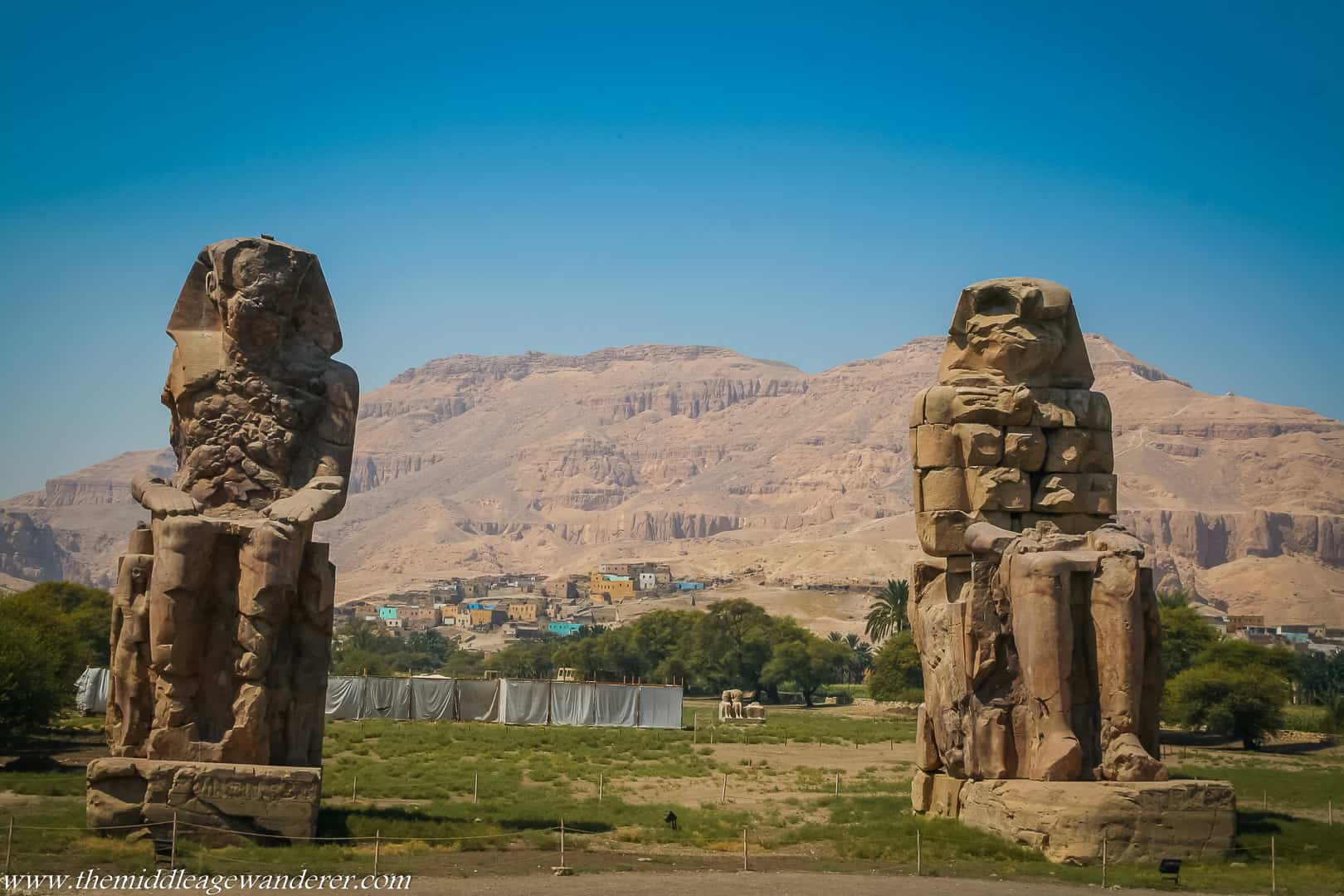
You’ll likely pass these on your way to the Valley of the Kings or Hatshepsut’s Temple, and they are worth a quick stop. The Colossi of Memnon are two massive, seated statues of Pharaoh Amenhotep III, each about 18 metres tall. They are all that remain of what was once a huge mortuary temple, which has mostly disappeared over time.
They are a good reminder of just how massive and ambitious these ancient temples were. You don’t need long here; ten minutes is plenty, but it is an easy, free stop that adds to the overall experience of the West Bank.
💡 Tip: If you’re an early riser, swing by at sunrise. The morning light on the statues makes for some great photos, without the crowds.
Medinet Habu often flies under the radar, but it turned out to be one of my favourite temples on the West Bank. It is the mortuary temple of Ramses III, and it is surprisingly well preserved, with some of the original colours still visible on the columns and walls.
The carvings here are bold and dramatic, showing scenes of battle and victory. It feels more intimate than places like Karnak, and because it is less crowded, you can really take your time and soak it all in.
💡 Tip: If you want to visit somewhere that is impressive but not packed with tour groups, this is a great choice. Go earlier in the day when the light hits the carvings just right – it brings out all the detail.
The Ramesseum is the mortuary temple of Ramses II, one of Egypt’s most famous pharaohs. It’s not as intact as some of the other sites, but it still gives you a real sense of the scale these temples once had. The highlight here is the enormous fallen statue of Ramses II, which would have been around 17 metres tall when it was standing.
There are also beautifully carved reliefs on the walls, showing Ramses in battle and interacting with the gods. It’s a bit quieter here, which makes it a nice place to wander without the crowds.
💡 Tip: This is another one to see in the morning if you can. It’s not a long visit, but it’s a good stop to add if you are doing a full day on the West Bank.
Karnak is absolutely massive. It’s not just one temple; it’s a huge complex that was built over more than 2,000 years by different pharaohs. The scale of it is mind-blowing. You walk in and feel tiny next to the towering columns and wide courtyards.
What to Look For:
💡 Tip: Go in the late afternoon to avoid the biggest crowds. Or if you are up for something a bit different, consider the evening Sound and Light Show – it adds a whole other layer to the experience.

Luxor Temple sits right in the middle of the city – literally. It’s not hidden away in the desert like many of the others. Instead, you step off a busy street and suddenly find yourself surrounded by ancient columns and towering statues. It’s surreal.
Unlike most temples built to honour gods, Luxor Temple was all about the pharaoh’s divine role. It played a key role in the annual Opet Festival, during which statues of the gods were paraded between Karnak and Luxor Temple along the Avenue of Sphinxes.
Highlights:
💡 Tip: Visit at night. The way the temple is lit up makes it feel completely different – quiet, glowing, and absolutely magical.

If you want a break from the heat or a deeper understanding of what you have seen at the temples and tombs, the Luxor Museum is a great stop. It is not huge, but it is well-curated, and everything is displayed beautifully with good lighting and clear descriptions.
The artefacts here come from sites around Luxor, including statues, tools, mummies, and even items found in Tutankhamun’s tomb. It gives you context for what you are seeing out in the field.
💡 Tip: It’s a good place to visit in the late afternoon or evening (check opening times) when you are done with outdoor sites for the day. There is also air conditioning, something you will appreciate after a day in the sun.
Dendera Temple is about 64 kilometres (40 miles) north of Luxor and makes for a great half-day trip. It’s dedicated to Hathor, the goddess of love, beauty, and music, and it’s one of the best-preserved temples in Egypt.
The ceiling still has stunning blue paint, and you can clearly see the famous Zodiac of Dendera, an ancient astronomical map. There are also underground crypts and a rooftop chapel to explore, making it more interactive than some other sites.
💡 Tip: If you’re looking to see something different after visiting all the sites in Luxor itself, this is worth the trip. Go with a guide if you want the full story – the carvings and ceiling details are packed with meaning.

Esna Temple is about 58 kilometres (36 miles) south of Luxor, and it’s another worthwhile stop if you have time to venture a bit further. What makes this temple special is the vibrant ceiling – it was recently cleaned and restored, and the colours are incredibly vivid.
The temple is dedicated to the god Khnum, and much of it had been buried under centuries of mudbrick houses before being excavated. Now, parts of it are beautifully restored, and you can still see inscriptions in both Egyptian hieroglyphs and Greek.
💡 Tip: Esna is less visited than other sites, so it feels more relaxed. If you enjoy photography or just want to experience something with fewer crowds, this is a great choice.


Most of Luxor’s big attractions are best seen in daylight, but that doesn’t mean the city shuts down after dark. If you still have energy in the evenings, here are a few ways to make the most of your nights in Luxor:
This was one of my favourite night experiences in Egypt. Visiting Luxor Temple after dark is an entirely different experience – quiet, peaceful, and beautifully lit. The glow of the lights makes the carvings stand out even more, and it’s a lot cooler temperature-wise.
This nightly show walks you through the history of Karnak Temple with a dramatic light display and narration. It’s a bit dated in places, but if you’re into history and want to experience the temple in a different way, it can be a good option.
💡 Tip: Book your ticket through your hotel or cruise rep if you’re not confident navigating it on your own. It usually starts after sunset.
Luxor’s markets come alive at night, especially around the corniche and souk area. It can be a fun experience but be prepared for some hard selling. Stick to main streets, especially if you’re walking at night, and go early in the evening when it’s still busy.
You’ll see a lot of horse-drawn carriages around Luxor, especially in the evenings, offering quick tours of the city. Personally, I don’t support them, especially in busy traffic. Horses can easily be spooked, and there’s always a risk of accidents. The bitumen is hard on their joints, and in the heat, it’s just not a good environment for them.
Worse still, not all the horses are well cared for. Some are visibly underweight or in poor condition, and it’s heartbreaking to see. For that reason, I always skip this kind of activity and encourage others to think twice.
Absolutely. If you’re even remotely interested in ancient Egypt, Luxor is a must-see. The temples and tombs here are among the most impressive in the world, and many are incredibly well-preserved.
Generally, yes. Like most tourist areas in Egypt, Luxor is well-patrolled and focused on visitor safety. That said, stick to the main areas, avoid walking alone late at night, and use common-sense precautions. If you’re ever unsure, your hotel or guide can give up-to-date advice.
Ideally, two full days. That gives you enough time to explore the East and West Banks without feeling rushed. If you’re short on time, you can see the highlights in one packed day, but you’ll be moving fast.
Yes, you can. We visited as part of a Nile cruise, but it’s very doable to explore Luxor independently. Just know that the sites are spread out, especially on the West Bank, so you’ll need to plan your transport or hire a local driver for the day.
Loose, lightweight clothing that covers your shoulders and knees is a good rule of thumb – both for respect and sun protection. Comfy walking shoes, a hat, and sunscreen are must-haves.
If you’re doing both in one day, I’d suggest starting with the West Bank. Many of the tombs get hot quickly, and the earlier you go, the fewer crowds you’ll have. Then head back across the Nile for the East Bank sites later in the day.
Yes, but they can vary in cleanliness, and not all have toilet paper. Bring tissues and hand sanitiser just in case. I kept a roll of toilet paper in my bag just in case. Also, you may need to pay to use some toilets, so keep some small change with you.
Luxor is one of those places that truly stays with you. With its towering temples, richly decorated tombs, and deep connection to ancient history, it’s like stepping back in time. Whether you’ve got one day or a whole week, there’s more than enough here to fill your itinerary and your memory card.
This list covers some of the most unforgettable things to see in Luxor, but it’s just the beginning. Take your time, don’t try to cram too much into a single day, and allow yourself space to really absorb it all. There’s something magical about this place, especially when you slow down enough to take it in.

Hi, I’m Lisa Bundesen - the voice behind The Middle Age Wanderer. I’m a retired chartered accountant turned passionate traveller and photographer. Alongside my husband Darren (and with our two fur babies waiting at home in Australia), we explore the world one adventure at a time.
I’ve travelled to over 35 countries, and I created this blog to inspire fellow travellers in their 50s, 60s, and beyond to embrace adventure. Whether it’s hiking ancient trails, diving into new cultures, or sipping wine in scenic places, I believe life after 50 is the perfect time to explore more.
Here, you’ll find honest travel advice, destination guides, and real stories to help you travel smarter and with more confidence - because age is not a barrier, it’s an invitation.


Hi, I’m Lisa, a 50+ retired chartered accountant. My husband, Darren, and I explore the world every opportunity we get. Staying fit is key to our adventures, from hiking the Inca Trail to scuba diving. We call Australia home but travel overseas often, always eager to discover new cultures, bustling cities, cuisines, nature and wildlife.
We would love you to join us on our journeys and hope that our adventures give you encouragement to explore this amazing world.
As Seen On

Recent Posts




Categories
Action Camera We Use

Where We Book Accommodation
How We Research Flights

How We Protect Our Laptop

Our Hiking Guide

Related Posts
Discover the top things to see in Luxor – from ancient temples to royal tombs. This guide covers 11 must-see attractions with tips and travel advice.
This 1 Day Luxor Itinerary covers the best East and West Bank sites, with travel times, tips, and advice to help you make the most of your visit.
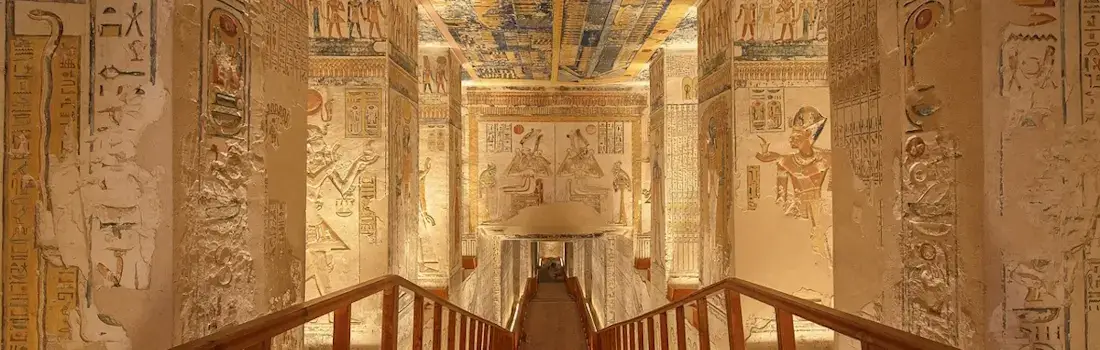
Discover the wonders of Egypt with our friendly guide to the Valley of the Kings and explore its rich history and treasures.
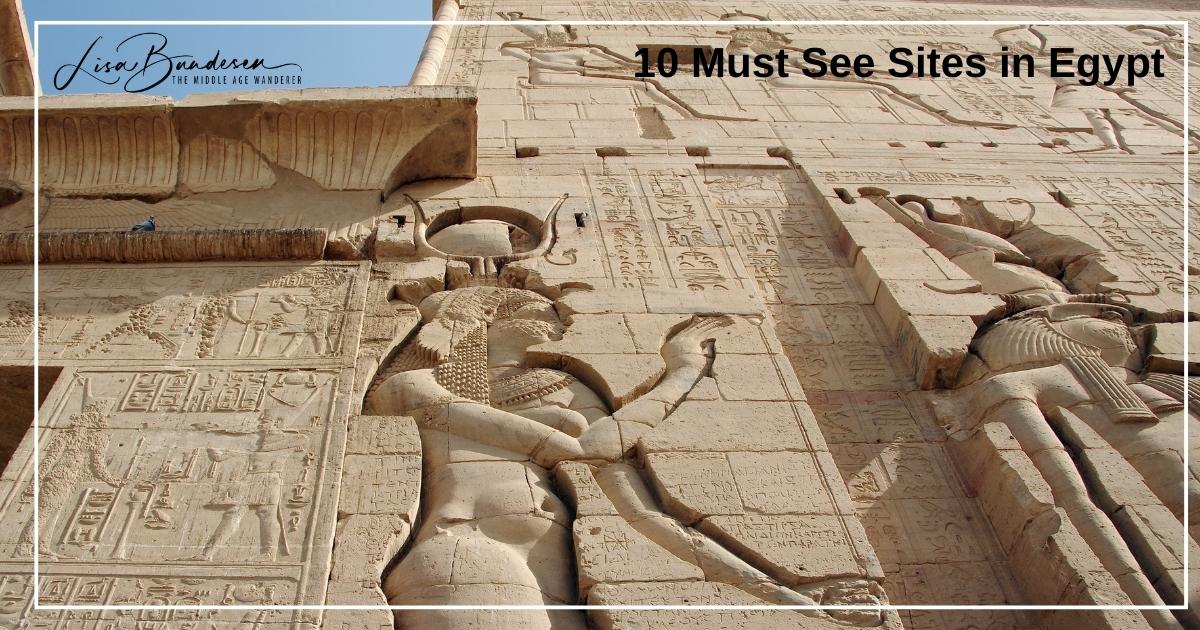
Egypt has so many amazing historical sites so here is a list of my 10 must see sites in Egypt to include in planning for your adventure there.

Explore the stunning Colossi of Memnon, two towering statues of Pharaoh Amenhotep III, standing proud in Luxor’s landscape.