

1 Day Graz Itinerary
Planning a quick trip? This 1 Day Graz Itinerary shows you how to explore the top sights, local eats, and cultural gems in just 24 hours.

Some of the links below are affiliate links, meaning, at no additional cost to you, I will earn a commission if you click through and make a purchase. This helps me to keep bringing you travel updates and news. See my Disclosure Policy for more information. I only recommend companies and products that I personally use.
This article is also featured on GPSmyCity. To download this article for offline reading or create a self-guided walking tour to visit the attractions highlighted in this article, go to Walking Tours and Articles in Graz.
When we first planned our trip to Austria, Graz wasn’t even on our radar. We ended up adding it to our itinerary almost by accident – a few free days opened up after a family catch-up fell through, and a bit of last-minute research pointed us toward this lesser-known city in southeastern Austria. We thought it would be a nice filler. Instead, it became a favourite.
We spent three days and two nights in Graz between Christmas and New Year’s Eve. Nestled in the heart of Styria, this city completely surprised us with its charm, walkability, and cultural richness. Rather than shouting for attention, Graz won us over quietly. We stayed in the Old Town and found ourselves immersed in its rhythm – cobbled lanes beneath our feet, soft glows of festive lights overhead, and centuries‑old architecture that feels lovingly preserved.
What makes Graz especially appealing for travellers in their 40s, 50s, and 60s is how easy it is to explore. The historic centre is compact and walkable, public transport is efficient, and there’s no pressure to rush. Whether you’re strolling through quiet Renaissance courtyards, taking in the city views from Schlossberg, or unwinding with a glass of wine at a streetside café, Graz has a way of making travel feel easy, enriching, and unhurried.
No visit to Graz is complete without heading up Schlossberg Hill. It’s the city’s most iconic landmark, and for good reason. Schlossberg rises above the Old Town, offering sweeping views over the rooftops and a chance to explore one of the city’s most historic and scenic areas.
At the top, you’ll find the Uhrturm (Clock Tower), which dates back to the 13th century. It’s one of the oldest structures in Graz and a symbol of the city. The tower’s unique feature? Its hands are reversed – the large hand shows the hours, and the small hand shows the minutes.
We took the Schlossbergbahn funicular to the top – a short, scenic ride that gives you a great perspective of the hill as you ascend. It was a smooth and easy option, especially after a busy morning exploring the Old Town.
Once at the top, Schlossberg Park awaits, filled with landscaped gardens, walking paths, and scattered ruins. It’s peaceful and quiet, which is the perfect contrast to the energy of the city below.
We spent ages just soaking in the views. There’s something timeless about looking out over those red-tiled rooftops, church spires, and winding alleys. Whether you go up for the history, the photos, or just to sit and enjoy the scenery, Schlossberg is absolutely worth the climb, in whatever form you choose.
On the way down, we opted for the stairs beside the indoor slide, which wind down through a series of platforms and tunnels. While the slide is one of the longest indoor slides in the world (175 metres), we decided to take the more scenic route on foot. This descent takes you through tunnel systems built into the hill, originally constructed as air raid shelters during World War II. They now serve as a unique pedestrian route, blending history with function. The tunnels are atmospheric and fascinating, and there’s even a lift inside the hill if you need it.

Graz’s Old Town is the heart of the city, and it’s no wonder it’s listed as a UNESCO World Heritage Site. The moment you step into this maze of narrow alleys and cobbled streets, you’re surrounded by centuries of history, beautifully preserved and still very much alive.
We stayed at the Palais-Hotel Erzherzog Johann, right in the heart of the Old Town. This historic hotel was the perfect base – elegant, welcoming, and just steps from Hauptplatz. Being able to walk out the door and straight into the charm of Graz made our stay even more memorable.
The Old Town is a beautiful blend of Gothic spires, Baroque facades, and Renaissance courtyards. During our visit, it was still glowing from the Christmas season, with lights strung across the streets and a quiet, festive feel in the air, but without the crowds of larger cities like Vienna or Salzburg.
To explore Old Town, Start at Hauptplatz, the main square, where the impressive Town Hall (Rathaus) dominates the view. From there, explore the winding streets and hidden passageways, many of which open into quiet, flower-filled courtyards or reveal local craft shops and inviting cafés.
For those of us who prefer a slower pace, the Old Town is wonderfully walkable. The streets are mostly flat, and the pace is relaxed. There’s no need to rush, just wander, take breaks at a café, and soak in the atmosphere. Graz is the kind of city that rewards those who meander without a strict plan.
It’s also beautifully lit at night, making it safe and picturesque for an evening stroll after dinner. Every corner seemed to offer a photo opportunity, and every alley felt like a quiet little secret waiting to be discovered.


Tucked away inside the Burg, the former Habsburg residence, lies one of Graz’s most fascinating architectural curiosities: the Double Spiral Staircase, also known as the “Staircase of Reconciliation.”
Built in 1499, this Gothic masterpiece features two intertwined spiral staircases that wind in opposite directions, occasionally meeting at the same landing. The result is a visual illusion that feels both elegant and mysterious – two separate paths that keep crossing, then parting again.
Finding it is part of the charm. Head to the Graz Castle (Burg) near the Old Town and look for the central courtyard. The staircase is discreetly tucked into one corner, and unless you’re looking for it, you could easily miss it, which makes the discovery all the more rewarding. It took us a little while to find it!
We were completely taken by surprise. It’s not a grand structure by size, but it’s one of those small, unexpected finds that stays with you. Quiet, uncrowded, and entirely unique – it’s the kind of place that makes you feel like you’ve uncovered a secret piece of history.

Right in the centre of Graz’s Old Town, the Landhaus stands out as one of the most beautiful Renaissance buildings in Austria. Built in the 16th century, it now houses the Styrian government, but its real charm is in the inner courtyard.
Walking into the courtyard feels like discovering a quiet pocket of the past. The arcades and arched windows give it a graceful rhythm, and there’s a stillness that makes you want to linger. It’s open to the public, but we were surprised by how few people were there – it really felt like our own little corner of Graz for a moment.
The courtyard is also used for cultural events and concerts, so depending on when you visit, you might stumble across live music or a local performance, all surrounded by some of the finest Renaissance architecture in the country.
For us, it was one of those places where we paused, took a deep breath, and simply enjoyed the beauty and quiet – something we’ve come to value more and more in our travels.
🔐 If you’re travelling internationally, especially when booking or using public Wi-Fi, don’t miss our guide on whether you should use a VPN overseas.
Right next to one another in the heart of Graz, the Graz Cathedral (Dom) and the Mausoleum of Emperor Ferdinand II offer a striking blend of Gothic and Baroque architecture and a deep sense of the city’s imperial past.
The cathedral, built in the 15th century, is a serene space filled with soft light, ornate frescoes, and a beautifully carved high altar. It’s a place to slow down, sit quietly, and take in the spiritual heart of the city. One of its most famous features is the “God Plague” fresco on the outside wall, a haunting image that recalls a deadly 17th-century epidemic.
Right next door, the Mausoleum of Ferdinand II steals the show with its elaborate Baroque dome and richly decorated facade. Inside, you’ll find the tomb of the emperor himself, resting in a setting that feels more like a palace chapel than a burial site. Check opening time, though. It wasn’t open when we were there so that we couldn’t go inside.
Together, these two landmarks offer a moving and memorable experience – architectural beauty, historical depth, and a welcome moment of calm amid sightseeing.


Just a short walk from the Old Town, Stadtpark is Graz’s green heart – a peaceful urban escape that’s ideal for slowing down your pace. Originally laid out in the 19th century, this sprawling park is full of shady trees, winding paths, and open lawns perfect for a relaxing break from sightseeing.
We loved how locals of all ages use the space – families with kids, students from nearby universities, and older couples strolling hand in hand. The vibe is calm and welcoming, making it a great place for travellers who want a quiet moment between museum visits and historic sites.
Scattered throughout the park, you’ll find fountains, statues, and even a few resident ducks and swans gliding across the small ponds. There’s a statue of Emperor Franz Joseph I, and benches everywhere if you just want to sit and enjoy a coffee or snack.
If you’re visiting during spring or summer, Stadtpark is especially vibrant, with flowerbeds in bloom and the occasional outdoor performance or market.
🧥 If you’re travelling to Graz – especially in winter – make sure you layer your clothes to stay warm and comfortable while exploring.
Nicknamed the “Friendly Alien,” Kunsthaus Graz is impossible to miss. Its bold, futuristic shape stands in stark contrast to the Baroque and Renaissance buildings around it – a blue, biomorphic structure that looks like it landed in the middle of the historic city.
Inside, the museum is just as unconventional. It focuses on contemporary and experimental art, with rotating exhibitions that challenge and inspire. When we visited, there was a modern art exhibit on, and we ended up spending far more time there than we expected, just wandering through the space and reflecting on the pieces.
If you enjoy modern art or even if you’re not sure but are open to something different, it’s well worth stopping by. Check ahead to see what exhibitions are currently showing via the Kunsthaus Graz website or the Graz Tourism Board.
Even if you don’t go inside, the building alone is worth a look – it’s one of Graz’s most photographed sites and a symbol of the city’s creative spirit.

One of Graz’s most creative landmarks is Murinsel, a floating artificial island in the middle of the Mur River. Designed by American artist Vito Acconci, this steel-and-glass structure looks like a giant seashell nestled in the water.
Funnily enough, it was actually a photo of Murinsel that first got me researching Graz as a destination. The idea of a modern, architectural structure sitting in the middle of a river, right in a historic European city, caught my attention immediately. It was unlike anything I’d seen in Austria before.
Murinsel connects both sides of the city via pedestrian bridges and includes a small amphitheatre, a café, and seating areas where you can relax with a drink and watch the river flow by. It’s not a huge space, but it’s clever, eye-catching, and definitely worth a stroll.
Make sure to visit both during the day and at night: by day, it’s a striking piece of architecture surrounded by water and city views; by night, it’s transformed by lights that shimmer across the river’s surface, giving it a totally different, almost magical character.
It’s also a good spot to pause during a walking day, grab a coffee at the café or sit for a while before continuing your exploration.

Just a short tram ride from the city centre lies Eggenberg Palace, one of the most stunning Baroque residences in Austria. Surrounded by beautifully landscaped gardens and home to grand state rooms filled with art and history, it offers a peaceful escape from the more compact Old Town.
The palace is part of the Universalmuseum Joanneum and features richly decorated interiors, astronomical symbolism in its layout, and opulent furnishings that give you a sense of aristocratic life in the 17th century. Each of the 24 state rooms is unique and steeped in symbolism, from celestial motifs to allegorical frescoes.
The palace grounds are just as captivating. Peacocks roam freely, adding a touch of whimsy to your walk through manicured gardens and tree-lined paths.
It’s very easy to get there by tram, and it’s well worth carving out half a day for both the palace and the gardens. It offers a nice balance of light walking, history, and quiet beauty.
📸 If you’re planning to capture all the beautiful sights in Graz, don’t forget to read our guide to The Best Memory Card for Travel – because running out of space mid-trip is never fun!
For a dose of elegance and culture, the Graz Opera House is not to be missed. This neo-Baroque masterpiece is one of Austria’s most beautiful performance venues, and even if you’re not planning to attend a show, the building itself is well worth visiting.
The outside of the opera house is impressive enough, but it’s the inside that really took our breath away – rich red velvet seats, golden accents, and staircases that wouldn’t look out of place in a classic film. If you’re even a little curious, a guided tour is a great way to see beyond the main stage and
hear the stories behind the building’s grand design. If your visit coincides with a performance – opera, ballet, or classical concert – it’s a wonderful evening out. The venue is small enough to feel intimate but large enough to be impressive, and the quality of performances is top-tier.
For travellers looking for a cultured, low-energy activity in the evening, this is an ideal choice. Even just admiring the building by day or night adds a touch of grandeur to your Graz itinerary.
🔌 Not sure which plug to pack for your trip to Austria? Check out our guide on What Travel Adapter Do I Need When Travelling? It’ll save you hassle (and dead batteries).
Q: Is Graz worth visiting?
A: Absolutely. While it may not be as well‑known as Vienna or Salzburg, Graz offers a blend of history, culture, modern design and relaxed pace, especially well-suited for travellers looking for a European city break without the crowds.
Q: What are the top things to see in Graz?
A: Some must-see highlights include the hilltop Schlossberg with its iconic Clock Tower, the beautifully preserved Old Town (Altstadt), which is a UNESCO World Heritage site, the quirky Murinsel floating island, the modern art museum Kunsthaus Graz (“The Friendly Alien”), the elegant Eggenberg Palace and the relaxed green space of Stadtpark.
Q: How do I get to Graz?
A: You can arrive by train (direct from Vienna in around 2.5 hours), by air via Graz Airport (about 10 km south of the city centre), or by car using Austria’s motorways (e.g., A2 from Vienna). The train is a comfortable and scenic choice – we booked business class and ended up being the only passengers in our carriage.
Q: When is the best time to visit Graz?
A: It depends on what you like. We visited between Christmas and New Year and loved the festive feel without huge crowds. Spring and autumn offer mild weather and fewer tourists. Summer brings more events and longer days, though it may be busier with locals and students.
Q: Is Graz walkable and suitable for older travellers?
A: Yes. The historic centre is compact and easy to explore on foot. Public transport (trams and buses) is efficient for destinations outside of the town centre, such as Eggenberg Palace. Staying centrally (for example, at the Palais-Hotel Erzherzog Johann) means minimal transit and more relaxed exploring.
Q: Do I need more than one day in Graz?
A: While you can see the main sights in one full day, staying two nights (or more) allows you to explore at a more leisurely pace, experience time to rest or enjoy a café, and visit sites slightly further out (e.g., Eggenberg Palace). Especially for travellers who prefer a gentler pace, two days is ideal.
Q: Where should I stay in Graz?
A: A great choice is the historic centre. We stayed at the Palais Hotel Erzherzog Johann, right in the Old Town, making it extremely convenient for walking out and exploring right away.

Before we arrived, Graz was a bit of a wildcard – a last-minute addition to our itinerary when other plans fell through. But from the moment we stepped into the Old Town, we knew we’d found a hidden gem.
Graz isn’t just beautiful – it’s effortlessly enjoyable. The mix of medieval charm, Baroque grandeur, and modern creativity creates a city that feels layered and alive. It’s compact but never boring, cultured without being overwhelming, and full of surprises (like the double spiral staircase or the floating Murinsel).
It hits that perfect balance: easy to get around, full of meaningful sights, and far less crowded than Austria’s more touristy cities. We felt relaxed, inspired, and a little bit like we’d discovered a place others had overlooked.
So, is Graz worth visiting? Absolutely. In fact, it’s the kind of place we now recommend to others looking for a European city break that’s rich in culture, easy to explore, and genuinely memorable.

Hi, I’m Lisa Bundesen - the voice behind The Middle Age Wanderer. I’m a retired chartered accountant turned passionate traveller and photographer. Alongside my husband Darren (and with our two fur babies waiting at home in Australia), we explore the world one adventure at a time.
I’ve travelled to over 35 countries, and I created this blog to inspire fellow travellers in their 50s, 60s, and beyond to embrace adventure. Whether it’s hiking ancient trails, diving into new cultures, or sipping wine in scenic places, I believe life after 50 is the perfect time to explore more.
Here, you’ll find honest travel advice, destination guides, and real stories to help you travel smarter and with more confidence - because age is not a barrier, it’s an invitation.


Explore the World with Us!
Join our newsletter for travel advice, tips and inspiration.
Hi, I’m Lisa, a 50+ retired chartered accountant. My husband, Darren, and I explore the world every opportunity we get. Staying fit is key to our adventures, from hiking the Inca Trail to scuba diving. We call Australia home but travel overseas often, always eager to discover new cultures, bustling cities, cuisines, nature and wildlife.
We would love you to join us on our journeys and hope that our adventures give you encouragement to explore this amazing world.
As Seen On
HuffPost

Action Camera We Use

How We Research Flights

How We Protect Our Laptop

Our Hiking Guide

Related Posts
Planning a quick trip? This 1 Day Graz Itinerary shows you how to explore the top sights, local eats, and cultural gems in just 24 hours.
Plan your perfect city break with this guide to the top things to see in Graz – from castles and courtyards to art, architecture, and scenic views.
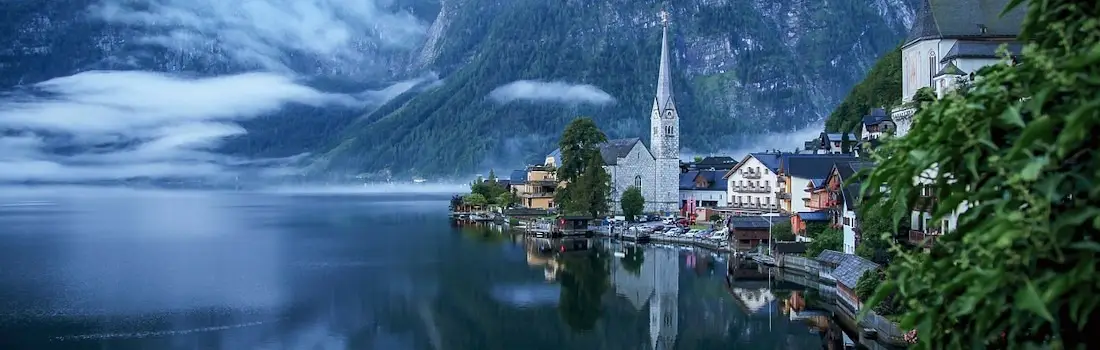
Your ultimate guide to Hallstatt: uncover hidden gems, cultural insights, and tips for a memorable Austrian village experience.